Xelivor
Choosing a 40G QSFP+ transceiver is not just a matter of matching a port. Buyers need to check the link distance, fiber type, connector, wavelength, and equipment compatibility. A module that looks identical in a product photo may behave differently across a short multimode link and a longer single-mode run. Small details matter.
This guide examines ten suppliers serving China’s 40G QSFP+ market. It considers product range, published specifications, customization options, quality controls, and technical support. These factors help buyers compare vendors, but a “top ten” list should not be treated as a universal ranking. Requirements vary between data centers, enterprise networks, and carrier environments. So does supplier performance.
A credible introduction should quote a named expert only when the wording and attribution can be verified. No source for such a quotation was provided here, so inventing one would weaken the reliability this topic requires. That is a limitation worth acknowledging. The comparison should instead encourage readers to request datasheets, confirm interoperability with their specific switches, and ask how suppliers test each module. Check the fine print. A clear warranty and responsive support can matter as much as headline specifications when a link fails after installation.
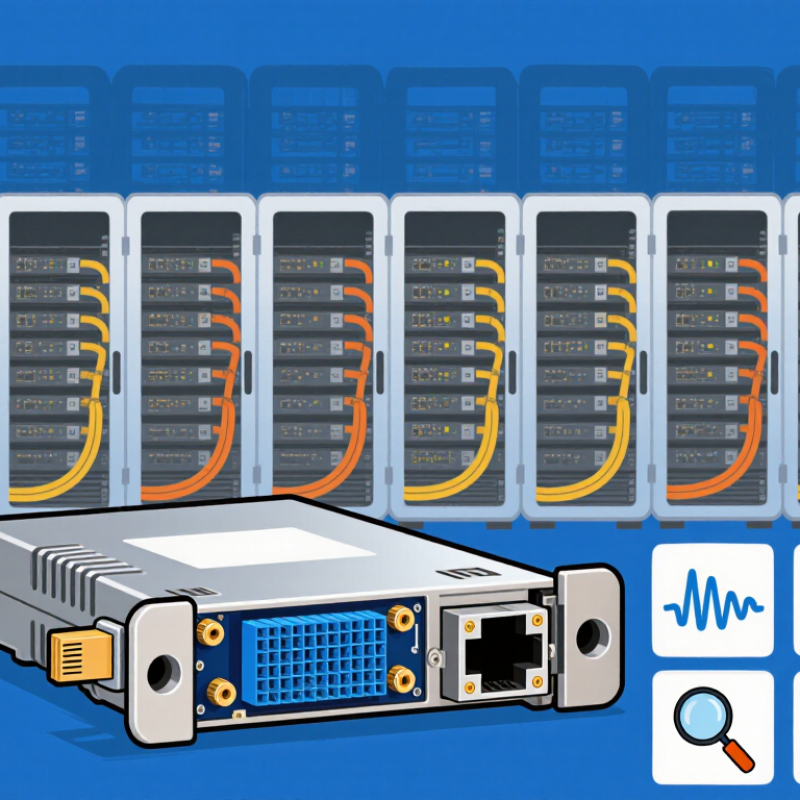
A 40G QSFP+ transceiver carries traffic through four lanes, each running at 10.3125 Gb/s. Together, the lanes provide the signaling capacity used for 40GbE. The number may look unusual, but Ethernet encoding and signaling overhead make it useful to distinguish lane rate from the nominal 40-Gb/s data rate. Each lane is a separate path, like four narrow roads feeding one network link.
On the electrical side, the host and module exchange four lanes. The optical side depends on the module type: parallel-fiber designs can send lanes across multiple fibers, while wavelength-division designs combine signals onto fewer fibers. Connector type, reach, fiber grade, and switch compatibility all matter during selection. A module that fits physically may still fail to link. That detail is easy to overlook. Specifications can also be read too quickly; I would verify the supported interface and link mode before installation.
Tips: Check the port configuration and fiber path before connecting. Clean the fiber ends, confirm polarity where relevant, and inspect link diagnostics after startup. If a link remains down, test one variable at a time—fiber, port, then module. That is slower, but often clearer.
For 40G QSFP+ selection, the reach class is a practical starting point, not a complete guarantee. Under IEEE 802.3ba, 40GBASE-SR4 supports up to 100 m over OM3 multimode fiber. It sends four lanes across parallel fiber paths, typically through an MPO-style connection. The connector and fiber polarity must match the installed cabling. Small details matter. A reversed polarity or poorly seated connector can prevent a link from coming up, even when the distance is within specification.
40GBASE-LR4 is designed for up to 10 km over single-mode fiber. It carries four wavelengths over a duplex fiber pair, which suits longer campus or data-center interconnects. The reach figures look clean on paper; patch panels, connector loss, and dirty end faces complicate real installations. I would compare suppliers by checking documented standards compliance, interoperability testing, diagnostic monitoring, and clear support for the intended fiber plant. A familiar mistake is choosing by reach alone. That is not always enough: verify the complete optical link budget and inspect the connectors before deployment.
When comparing China-based 40G QSFP+ suppliers, ask for the exact specification behind each module. Check alignment with applicable IEEE requirements and QSFP+ Multi-Source Agreement dimensions and interfaces. Confirm wavelength, reach, fiber type, connector, and power budget in writing. Small wording differences can change whether a module fits an existing link.
Ask how units are tested before shipment. Useful records may include transmit power, receiver sensitivity, wavelength, and digital diagnostic monitoring readings. Request sample results, then test samples in your own switches and fiber path. A clean lab report is helpful, but it cannot guarantee performance in every network. That matters. Also ask about operating-temperature limits, lot traceability, and procedures for handling failed units. Details count.
Production capacity needs evidence, not just a large monthly figure. Ask whether sample and production units use the same components and test steps. Check typical lead times, change-control notices, and how the supplier manages repeat orders. Support should include clear response channels, troubleshooting steps, and replacement terms. Test the process with a technical question before committing. A slow answer is a signal, though not the whole story. I would still verify the claims independently; supplier documents can be incomplete.
China’s 40G QSFP+ supplier landscape is best assessed through engineering capability, not catalog size alone. The Annual Internet Report (2018–2023) projected global data-center traffic would reach 20.6 zettabytes in 2021. This is a historical forecast, not a current measurement or a 40G sales figure. It still illustrates why reliable optical links matter.
Small details count. Ask for test records, operating-temperature limits, and interoperability results—not just a datasheet. A supplier may quote an impressive reach, yet connector cleanliness and patch-cord quality can still affect performance. These profile lenses are useful, but they are not verified company rankings; check each candidate’s current evidence before publishing or purchasing.
China Top 10 40G QSFP+ Transceiver Suppliers?
Choosing a Supplier by Fiber Type, Link Distance, and Equipment Compatibility
A 40G QSFP+ module should match the installed fiber, not just the port label. For short data-center links, SR4 optics use parallel multimode fiber and MPO connectors. Their reach depends on fiber grade; OM4 can support longer links than OM3. For longer runs, LR4 modules use single-mode fiber and duplex LC connectors, often reaching up to 10 kilometers. Check the exact module specification before ordering. Distance claims can vary.
Compatibility matters just as much. Confirm that the switch supports the module type, its operating temperature, and the required port mode. Some QSFP+ ports support four 10G breakout links; others may not. Ask suppliers for clear compatibility lists, test records, and warranty terms. Also check connector polarity and clean the fiber ends before installation. Small details cause real delays. A low price can be tempting, but unclear testing or return policies create risk. I would compare these details in writing, even when the product page looks complete. It may still leave questions.
| No. | Supplier capability to evaluate | Fiber or cable and interface | Reference link distance | Equipment compatibility checks | Evidence to request |
|---|---|---|---|---|---|
| 1 | 40GBASE-SR4 multimode option | 850 nm multimode fiber; MPO-12 connector, with eight fibers used for the four transmit and four receive lanes. | Up to 100 m on OM3 or 150 m on OM4 under the applicable 40GBASE-SR4 specifications. | Confirm the host has a QSFP+ port and supports SR4. Check MPO polarity, fiber type, and the optical patch-cord path. | Module datasheet, supported fiber grades, connector/polarity details, and a written host-platform compatibility list. |
| 2 | 40GBASE-LR4 single-mode option | 1310 nm single-mode fiber; duplex LC connector. | Up to 10 km on single-mode fiber. | Verify both ends use compatible LR4 optics and that the equipment supports the module coding and optical interface. | Datasheet identifying 40GBASE-LR4, wavelength specifications, reach, transmit/receive limits, and compatibility information. |
| 3 | 40GBASE-ER4 extended-reach option | 1310 nm single-mode fiber; duplex LC connector. | Up to 40 km for 40GBASE-ER4, subject to the link budget and installation conditions. | Check the complete optical budget, connector losses, fiber attenuation, and whether the host supports ER4 modules. | Optical power and sensitivity specifications, maximum reach conditions, and any guidance on dispersion or link-budget limits. |
| 4 | 40G PSM4 single-mode parallel optics | 1310 nm single-mode fiber; MPO interface using parallel transmit and receive fibers. | Up to 500 m for modules specified to the PSM4 MSA. | Confirm the module follows the PSM4 specification and that the installed MPO trunk has the correct fiber count and polarity. | PSM4 MSA conformance details, MPO pin/polarity information, and the supported link-budget conditions. |
| 5 | 40GBASE-SR-BiDi multimode option | 850 nm multimode fiber; duplex LC connector, using bidirectional transmission over two fibers. | Reference distances are typically up to 100 m on OM3 and 150 m on OM4 for compliant implementations. | Check that both ends are the matching BiDi type; do not pair a BiDi module with an SR4 module on the same link. | Standard or MSA conformance, matching-end requirements, supported fiber grades, and wavelength/transmit-receive specifications. |
| 6 | 40GBASE-CR4 direct-attach copper | QSFP+ to QSFP+ passive or active copper twinax assembly. | 40GBASE-CR4 copper links support distances up to 7 m; the usable length depends on the assembly and host implementation. | Verify the exact cable length, passive/active type, port support, and any platform-specific cable qualification requirements. | Cable datasheet, supported lengths, electrical compliance information, and host compatibility confirmation. |
| 7 | 40G active optical cable (AOC) | Factory-terminated optical cable with QSFP+ connectors at both ends; the cable and optics form one assembly. | Product-specific; reach is determined by the AOC datasheet rather than a universal 40GBASE reach figure. | Confirm that the whole AOC assembly is supported by both endpoints. AOC assemblies are not automatically interchangeable across platforms. | Exact length options, optical/electrical specifications, supported host platforms, and return or replacement terms. |
| 8 | 40G-to-4×10G breakout support | SR4 QSFP+ with a compatible MPO-to-four-duplex-LC harness, or a qualified QSFP+ to 4×SFP+ cable assembly. | For SR4 breakout, the 10G links can reach up to 100 m on OM3 or 150 m on OM4 when the full channel meets the applicable requirements. | Confirm the switch supports breakout mode, the correct port configuration, and compatible 10G endpoints and cabling. | Platform configuration instructions, supported breakout combinations, cable pinout, and end-to-end channel requirements. |
| 9 | Equipment coding and interoperability support | Applies to the selected QSFP+ optical module, copper cable, or AOC. | Does not determine optical reach; it determines whether the equipment recognizes and operates with the product. | Check the exact equipment model, port, software/firmware version, module coding, and any platform restrictions. Compatibility should not be inferred from connector type alone. | A compatibility matrix, sample-test procedure, coding options, and written confirmation for the intended equipment and software version. |
| 10 | Diagnostics, temperature, and quality documentation | Confirm the module type and operating environment; diagnostics and temperature limits vary by product. | Not a reach category. Confirm operating limits against the deployment environment and optical link budget. | Check digital diagnostic monitoring support, operating-temperature range, and whether monitoring works with the intended host. | Datasheet, diagnostic-monitoring details, temperature limits, test/inspection records, warranty terms, and traceability information. |
Selection note: Distances shown are reference limits for the identified interfaces, not a guarantee for every installed link. Actual performance depends on module compliance, fiber grade, connector condition, channel loss, cable assembly, and host-device support. Verify the supplier’s current datasheet and test the intended equipment before deployment.
It supports up to 100 meters on OM3 multimode fiber. It uses four parallel fiber paths and typically an MPO-style connector. Short reach, but details matter.
It is designed for distances up to 10 kilometers over single-mode fiber. Four wavelengths travel across a duplex fiber pair, often with LC connectors.
Match the module to the installed fiber, link distance, and switch port. Check the exact specification, port mode, and operating-temperature limits. The port label alone is not enough.
Incorrect polarity or a poorly seated connector can stop a link from coming up. Dust on an end face can also affect performance. Inspect and clean the fiber ends.
No. Patch panels, connector loss, and patch-cord quality affect the optical link budget. Measure the complete path before deployment.
No. Support depends on the host equipment and its port mode. Confirm compatibility with the equipment documentation or supplier test records.
Ask for standards-compliance evidence, interoperability results, diagnostic details, and production traceability. Clear warranty terms and engineering support matter too. A large catalog proves little.
Request test records, temperature limits, compatibility information, and return terms. Compare them in writing. I would still double-check the details; datasheets can leave gaps.
This article introduces the fundamentals of the 40G QSFP+ transceiver, explaining how four 10.3125-Gb/s lanes combine to support 40GbE connectivity. It outlines common IEEE 802.3ba reach classes, including SR4 for links up to 100 meters over OM3 multimode fiber and LR4 for links up to 10 kilometers over single-mode fiber. These differences help readers understand how module type, fiber, and distance affect network design.
The article also presents profiles of ten China-based suppliers and offers a practical framework for evaluating them. Key considerations include standards compliance, testing procedures, production scale, technical support, and product documentation. By comparing these factors with fiber type, required link distance, and the compatibility needs of existing equipment, buyers can narrow their options and select a supplier suited to their deployment requirements.
