Xelivor
Xelivor
Xelivor
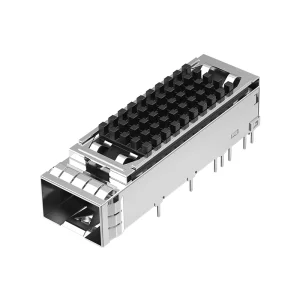
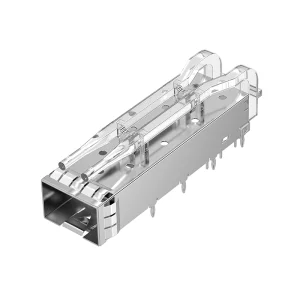
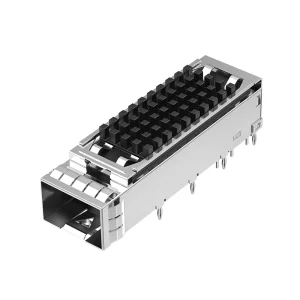
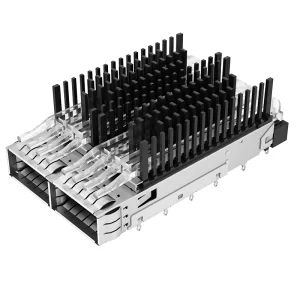
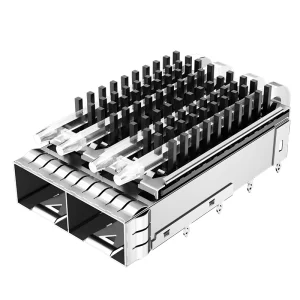
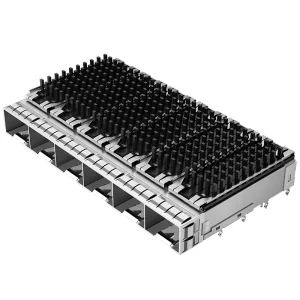
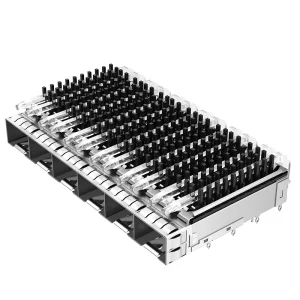
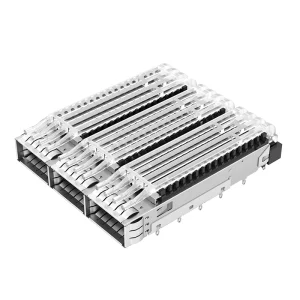
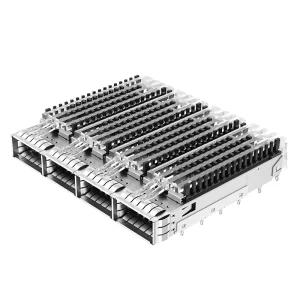
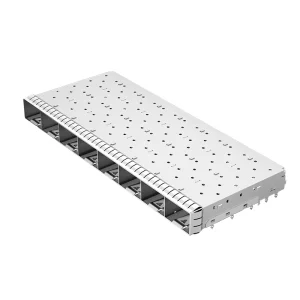
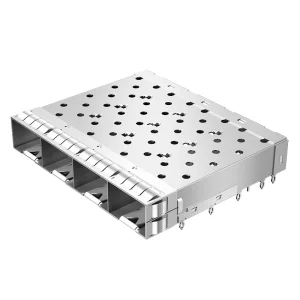
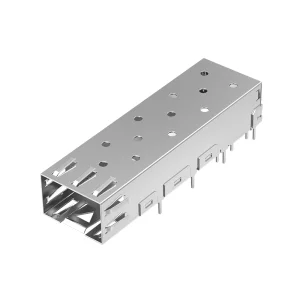
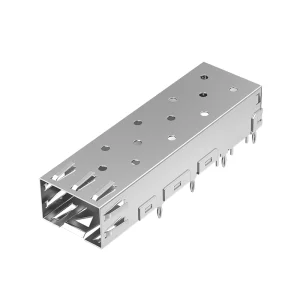
In modern high-speed communication systems, visual footprint optimization and electromagnetic reliability stand as twin pillars of PCB system design. The SFP Cage 1xN (Ganged Ports) configuration refers to a horizontal arrangement of 1 row of "N" contiguous Small Form-Factor Pluggable ports. Unlike stacked (2xN) configurations, which double port height to accommodate vertical pairings, the 1xN profile offers low-profile spatial clearance, making it indispensable for 1U-height network switches, edge routers, and server blades where vertical space is tightly constrained.
Designed with metal spring fingers or elastomeric conductive gaskets to ground the optical transceiver module directly to the system chassis faceplate, eliminating high-frequency radiation paths.
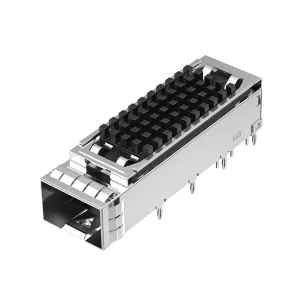
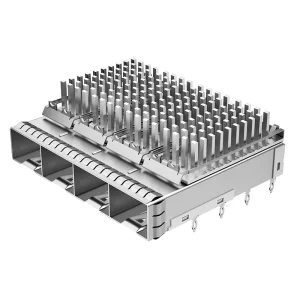
Integrated heatsink assemblies (including pin-fin, fin-on-fin, or custom profile geometries) maximize airflow thermal extraction for modules exceeding 2.5W to 5W power consumption.
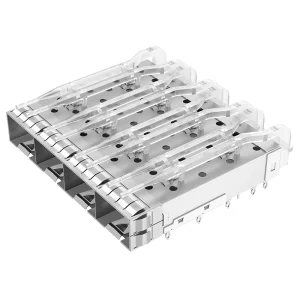
Optional mechanical structural light pipes direct PCB-mounted LED indicators through the front face of the cage, giving operators real-time link/activity diagnostics.
The rapid deployment of 5G New Radio (NR) networks, dense FTTH distribution lines, and private cloud data centers has triggered an unprecedented surge in demand for reliable SFP interconnect systems. According to recent market analysis, ganged 1x4 and 1x6 layouts represent the standard configuration for access-layer switches and distribution nodes across Europe, North America, and Eastern Asia. As hardware developers strive to achieve "zero-loss" data rates, the selection of component suppliers has shifted from cheap generic parts to verified cross-compatible components that drop-in replace major Tier-1 brands like TE Connectivity and Amphenol.
With high-performance computing (HPC) nodes moving to 100G (using 4x25G SFP28 links) and 400G (using PAM4 coding schemes), the structural robustness of the cage is critical. High-speed signals suffer from attenuation and jitter when cages exhibit subpar pin-to-trace integrity. Therefore, the industry relies on Press-Fit (elastic compliant pin) technology to secure electrical contact points without introducing the high-impedance thermal variations typical of manual wave soldering.
Engineers must choose between Through-Hole Technology (THT) solder and compliant pin Press-Fit designs based on production capacity, repairability, and PCB thickness. The table below highlights key functional trade-offs:
| Feature Parameter | Press-Fit (Elastic Compliant Pin) | THT Solder (Through-Hole) |
|---|---|---|
| Mechanical Retention | Excellent (Cold-welded gas-tight joint) | Very High (Chemical solder bond strength) |
| Thermal Stress on PCB | None (Room temperature mechanical insertion) | High (Requires wave or selective soldering) |
| Field Repairability | Easy (Simple extraction/insertion tooling) | Difficult (Requires board desoldering & cleaning) |
| Signal Integrity (SI) | Excellent (Minimal stub length, matched impedance) | Moderate (Solder joint fillets can introduce impedance discontinuity) |
| Typical Applications | Hyperscale Switch Blades, Data Center Fabrics | Industrial IoT Gateways, Legacy Telecom Racks |
The performance demands of 1xN ganged ports vary significantly by operating environment:
Outdoor cabinet enclosures (such as 5G remote radio heads or railway signaling boxes) experience wide thermal swings and humidity. In these conditions, standard nickel-plated copper alloys face galvanic corrosion. Designers specify ganged cages with thick matte tin plating over nickel underplates, integrated with elastomeric EMI gaskets that seal out contaminants while maintaining electrical contact with the chassis panel under mechanical vibration.
As air-cooling hits physical limits, direct-to-chip liquid cooling systems are becoming standard. Ganged cages must allow unobstructed horizontal and vertical fluid flow. Open-top configurations and custom low-profile heat sinks ensure coolant reaches adjacent optoelectronic components, preventing heat spots in high-port-count switches.
The physical layout of the SFP cage is evolving to support higher speeds. Historically, SFP+ (10 Gbps) and SFP28 (25 Gbps) were dominant. The market is now shifting toward SFP56 (50 Gbps PAM4) and SFP112 (100 Gbps PAM4 per lane). This migration creates two major engineering challenges:
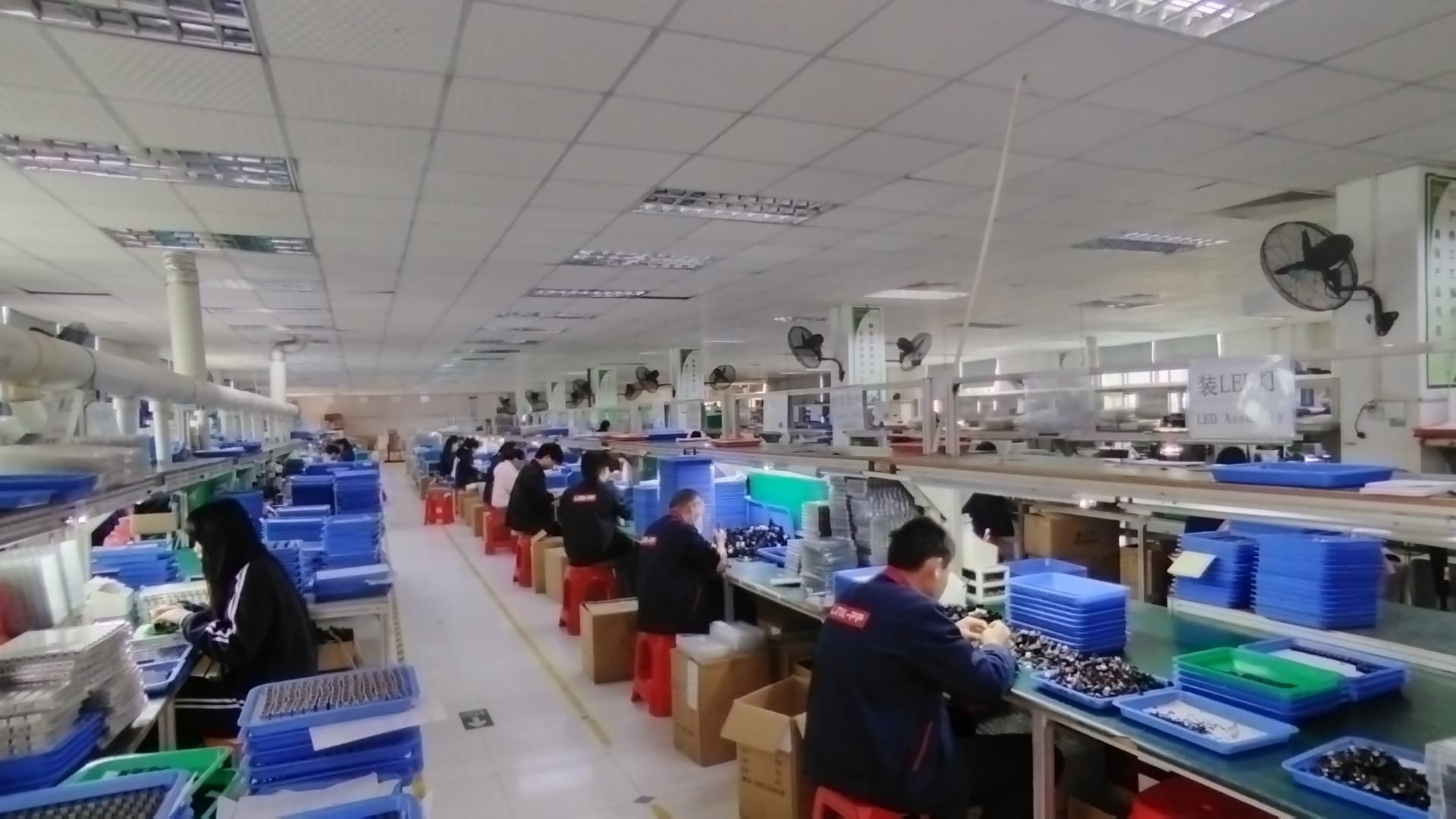
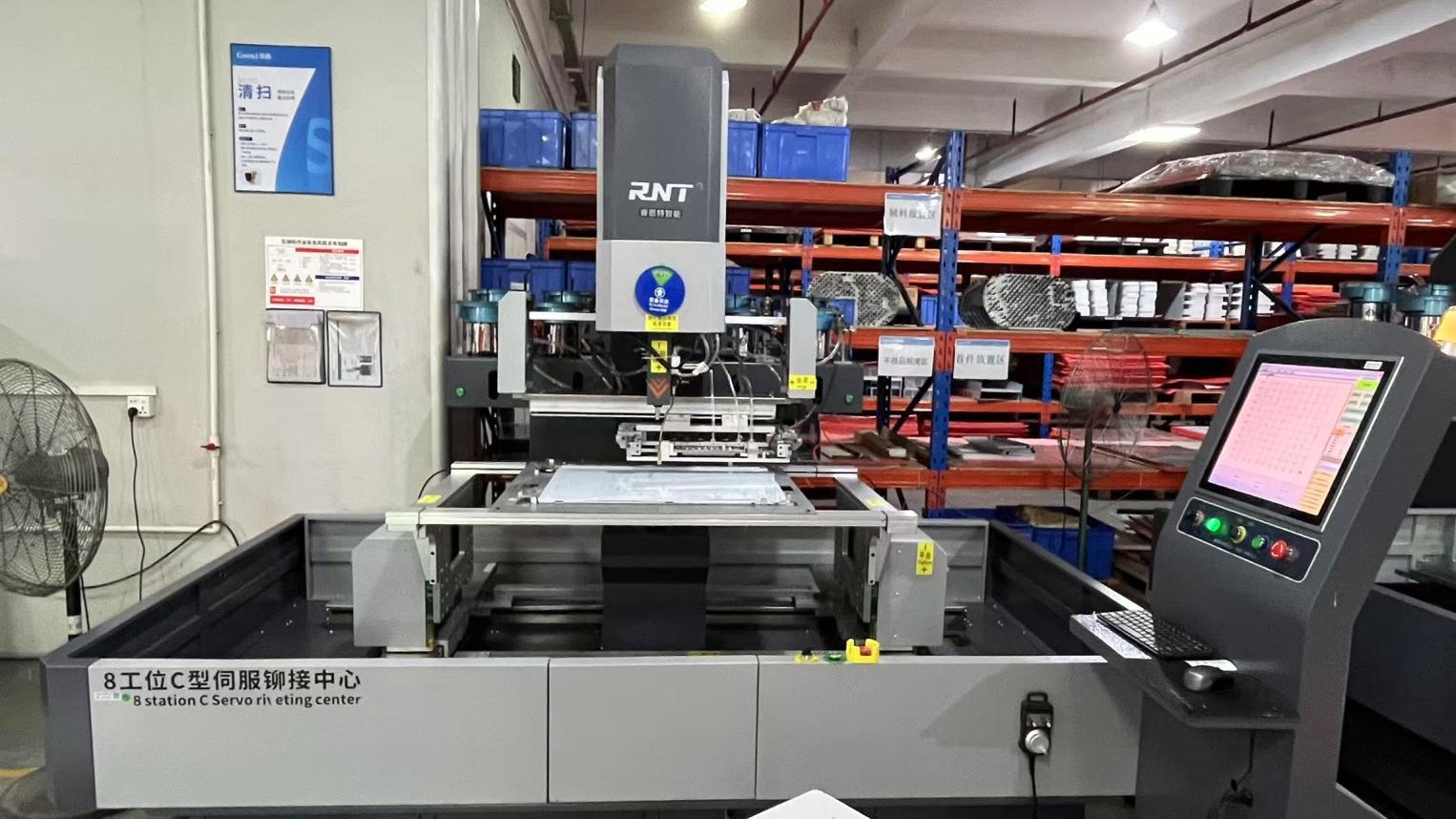
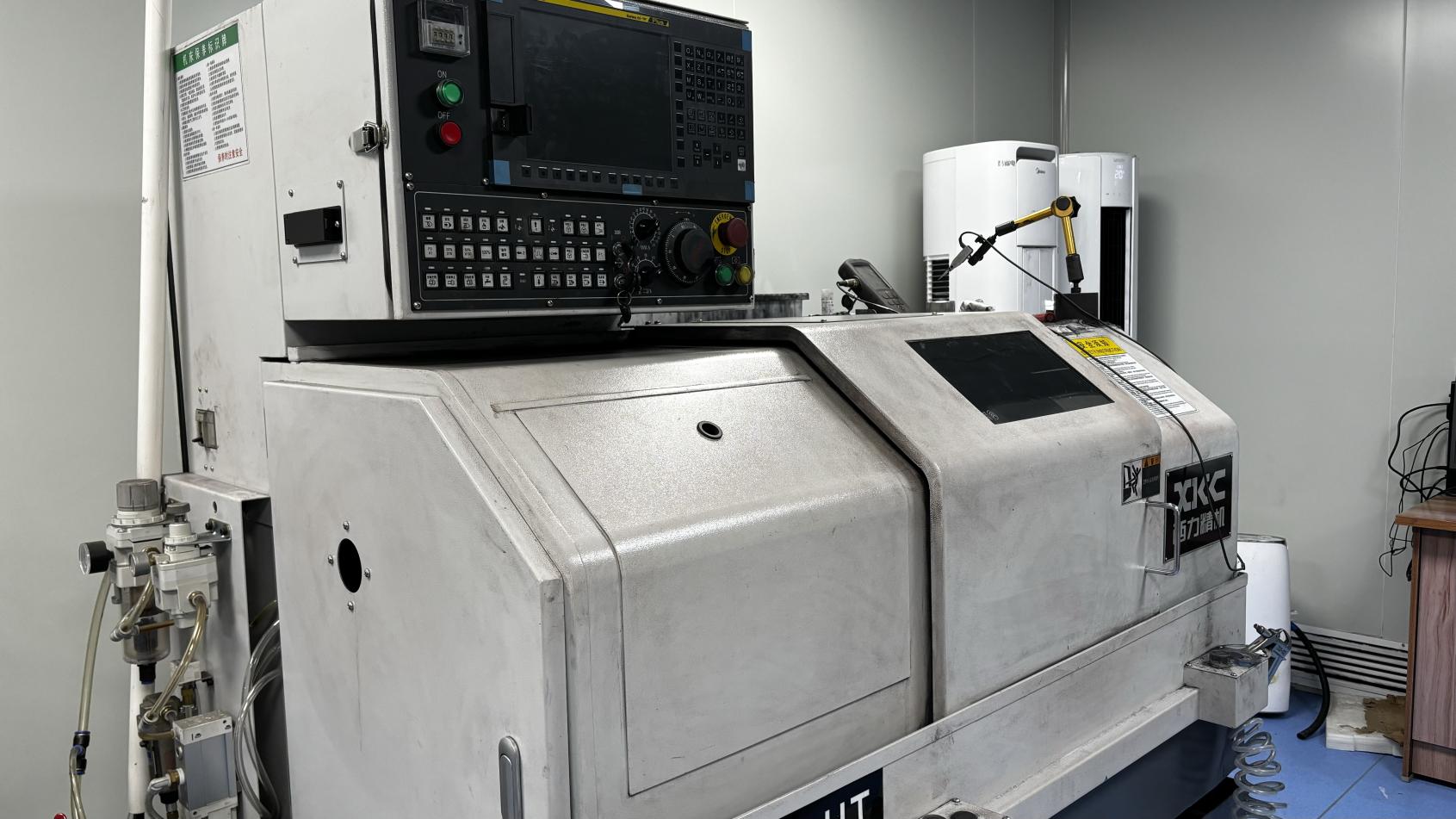
Xelivor Optoelectronics Co., Ltd. is a professional manufacturer of optical transceivers and fiber connectivity solutions, dedicated to serving global data center, telecom, enterprise network, and cloud computing industries. Established in 2016, the company operates from a modern manufacturing facility covering 386 m² and has built a strong reputation for delivering reliable, high-performance optical communication products worldwide.
With over 8 years of industry experience and 6 years of export experience, Xelivor has achieved annual export revenues exceeding USD 12 million. Our products are exported to customers across North America, Europe, Southeast Asia, the Middle East, and South America, supporting a wide range of networking applications from enterprise infrastructure to hyperscale data centers.
Xelivor specializes in the design, development, and production of optical transceivers, including SFP, SFP+, SFP28, QSFP28, QSFP-DD, OSFP, DAC, and AOC solutions. Backed by a dedicated R&D team of 68 engineers, the company continuously invests in innovation and launched more than 85 new products in the past year to meet the evolving demands of high-speed optical networks.
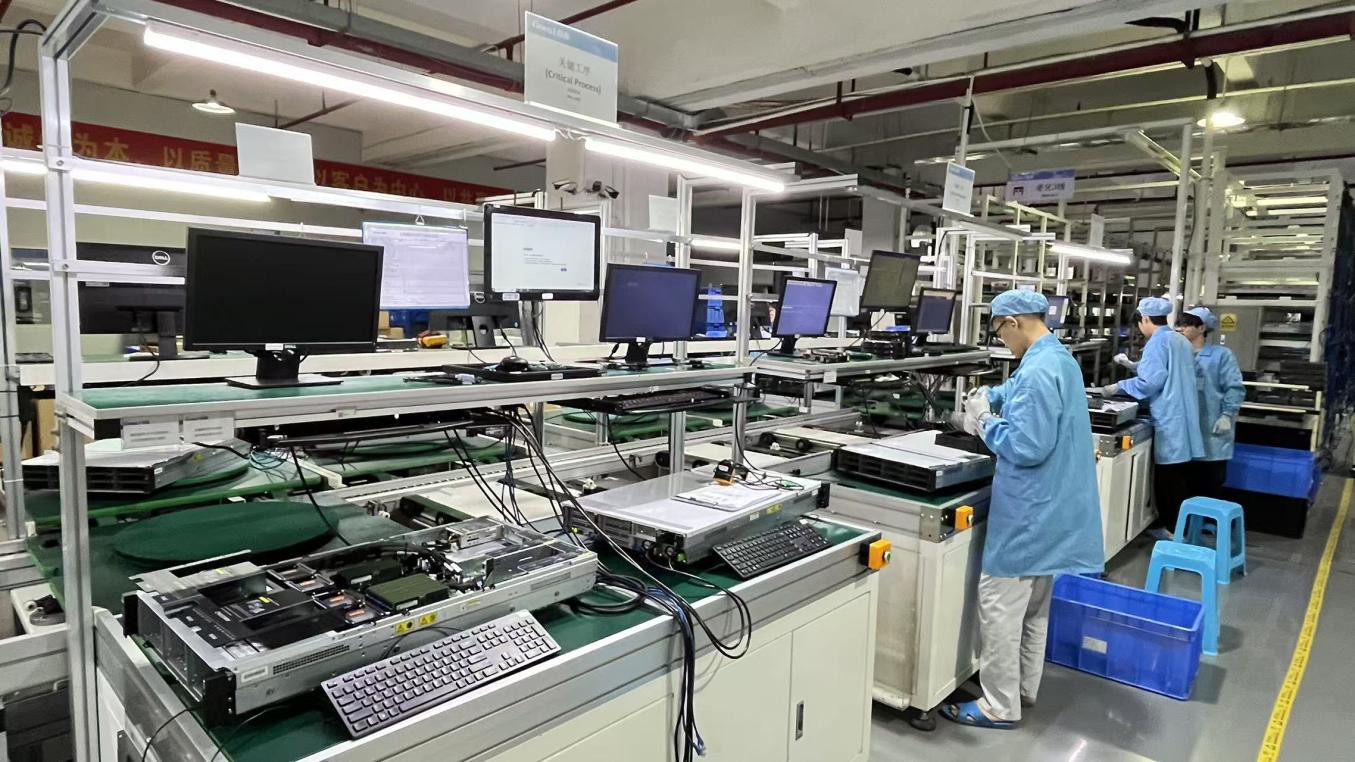
Quality is at the core of our operations. Our quality management system incorporates incoming material inspection, in-process quality control, aging tests, compatibility verification, optical parameter testing, and final product inspection. A professional quality assurance team of 32 inspectors ensures every product meets strict international standards before shipment.
The company maintains long-term cooperation with more than 850 supply chain partners, enabling stable sourcing, efficient production, and rapid delivery capabilities. Our flexible manufacturing system supports OEM, ODM, private label, customized firmware, customized labeling, and packaging services to satisfy diverse customer requirements.
As a company with strong independent R&D capabilities, advanced testing equipment, and a customer-oriented approach, Xelivor serves distributors, system integrators, telecommunications operators, data center providers, network equipment vendors, and enterprise customers worldwide. Driven by innovation, quality, and partnership, Xelivor Optoelectronics Co., Ltd. remains committed to providing cost-effective, reliable, and future-ready optical communication solutions for global networking infrastructure.
Ganged cages offer mechanical stability and alignment precision. By housing multiple ports in a single structure, they eliminate dimensional tolerance stacks during PCB mounting. This ensures accurate alignment with the faceplate cutouts and prevents module insertion issues. Additionally, the unified design simplifies assembly and routing on high-density PCBs.
Metal spring fingers are highly durable, cost-effective, and tolerate high insertion/extraction cycles. Elastomeric gaskets, which consist of conductive material over a foam core, provide a continuous contact seal that helps minimize high-frequency EMI leakage (above 10 GHz). However, they can degrade over time in harsh environments.
Press-fit pins provide a mechanical, solderless, gas-tight connection. This minimizes thermal stress on the PCB substrate during assembly and ensures a clean signal path. In contrast, wave soldering can introduce high-impedance stubs, thermal micro-cracks, and solder residues that degrade high-frequency signals.
Yes, Xelivor designs its SFP cages to follow SFF-8432 and SFF-8071 MSA dimensional standards. They drop-in replace equivalent TE Connectivity and Amphenol part numbers. This allows engineers to use alternative sourcing options without redesigning their PCBs.
Heatsink options like pin-fin or fin-on-fin designs help manage thermal loads from high-power transceivers. By matching the heatsink profile to the system's airflow velocity and direction, engineers can lower case temperatures. This prevents thermal throttling and extends the life of internal optical lasers.
The base metal is typically a copper alloy (like phosphor bronze or brass) for flexibility and strength. It is plated with nickel underplates (1.27µm minimum) and matte tin overcoats (2.54µm minimum) on the solder or compliant pin tails. This combination provides corrosion resistance, solderability, and electrical conductivity.