Xelivor
Xelivor
Xelivor
Browse our top-tier industrial optical solutions engineered for extreme longevity, precision engineering, and broad system compatibility.
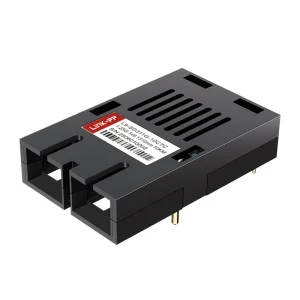
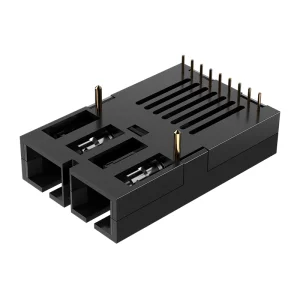
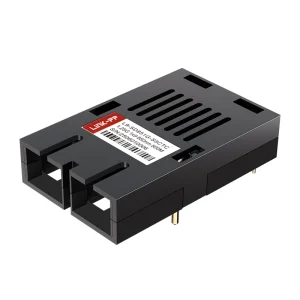
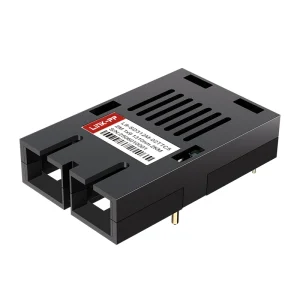
In the rapidly advancing landscape of high-speed telecommunications, the 1x9 optical transceiver remains a cornerstone technology for specialized, ultra-reliable network interfaces. Originating as a classic multi-source agreement (MSA) form factor, the 1x9 transceiver features a single row of nine pins arranged linearly. This physical architecture provides mechanical robustness and high electrical stability, making it distinct from hot-swappable formats like SFP or QSFP.
Unlike contemporary plug-in modules, 1x9 transceivers are typically soldered directly to the host printed circuit board (PCB). This rigid layout eliminates structural risks associated with contact finger wear, micro-vibrations, and dynamic mechanical stresses. Consequently, 1x9 transceivers are highly sought after by industrial hardware designers, smart grid engineers, and defense communication systems builders. They operate across standard data rates including 155 Mbps, 622 Mbps, and up to 1.25 Gbps, supporting both single-mode fiber (SMF) for long-haul networks and multi-mode fiber (MMF) for local, low-latency loops.
"The mechanical permanence of 1x9 architecture guarantees zero connector-drift failures, providing unparalleled Mean Time Between Failures (MTBF) profiles in environments subject to sustained harmonic vibration, heavy dust, and wide thermal fluctuations."
Electrical signals in 1x9 modules are driven through high-speed Pseudo-Emitter Coupled Logic (PECL) or Low-Voltage PECL (LVPECL) circuitry. Crucially, these modules incorporate specialized built-in Signal Detect (SD) indicators—often operating at Transistor-Transistor Logic (TTL) voltage levels—to instantly notify the host CPU of optical link failures, facilitating immediate auto-recovery pathways.
How modern enterprises deploy and procure 1x9 optical transceivers to support safety-critical infrastructure.
Modern power grids rely heavily on electromagnetic-immune (EMI) backplanes. Under IEC 61850 specifications, substations utilize 1x9 transceivers with SC or FC connections to link protection relays with central control stations, keeping critical control loops free from optical interruption.
Heavy rail systems operate alongside massive vibrational fields and electrical noise. 1x9 transceivers provide the backbone for trackside signaling networks and train control systems (TCMS) because their solder-in structure stands resilient against extreme G-force stresses.
Telecommunication giants globally maintain billions of dollars in active legacy DSLAM, SONET, and SDH frames. Procuring exact-spec, highly reliable 1x9 modules with extended operating lifetimes prevents costly complete system replacements, saving massive capital expenditures.
Procurement workflows for 1x9 modules differ significantly from consumer-grade network hardware. Procurement officers require long-term availability commitments (typically 7–10 year supply guarantees) to protect long lifecycle systems. Hardware compatibility must extend to legacy voltages (both 5.0V and 3.3V options) and diverse connector configurations, including SC, ST, FC, and custom pigtail fiber options.
Detailed performance parameters of standard 1x9 optical interfaces for strategic hardware integration.
| Module Configuration | Data Rate | Wavelength (Tx/Rx) | Fiber Type & Range | Connector Options | Signaling Logic |
|---|---|---|---|---|---|
| 1.25G Single Mode Duplex SC | 1.25 Gbps | 1310nm / 1310nm | SMF (up to 20 km) | SC / Dual SC | PECL / LVPECL + TTL SD |
| 1.25G Multimode Duplex SC | 1.25 Gbps | 850nm / 1310nm | MMF (500m / 2km) | SC / ST | PECL / LVPECL + TTL SD |
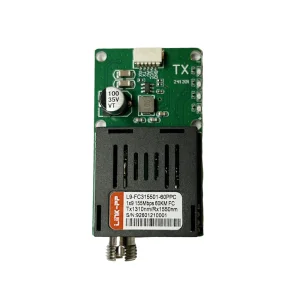
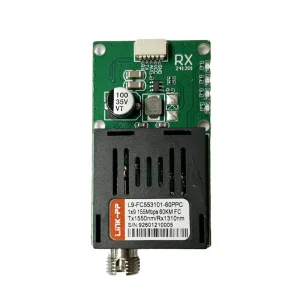
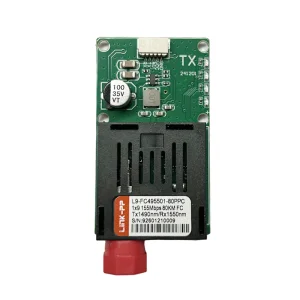
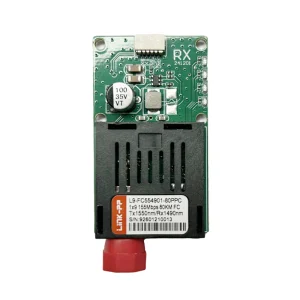
| 155M BiDi Long-Haul FC | 155 Mbps | 1310nm-Tx / 1550nm-Rx | SMF (60km / 80km) | FC / SC | PECL + TTL / PECL SD |
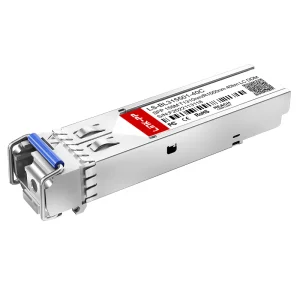
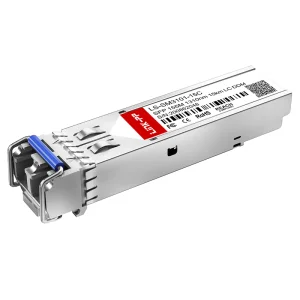
| 100BASE-LX Single Mode SFP | 125 Mbps | 1310nm / 1310nm | SMF (15 km) | LC Duplex | Digital Diagnostics (DDM) |
While the networking industry consolidates around micro-form factors like SFP-DD, OSFP, and high-density coherent interfaces for hyperscale data centers, the legacy 1x9 footprint continues to carve out a vital niche. The roadmap for 1x9 transceivers is evolving in two distinct directions:
1. Higher Optical Power Budgets: Modern industrial designs require optical links to span longer distances without intermediate active repeaters. Integrating advanced Avalanche Photodiode (APD) receivers and high-power Distributed Feedback (DFB) lasers allows modern 1x9 modules to achieve reliable transmission distances over 80km, even within tight thermal limits.
2. Hybrid SFP-to-1x9 Converters: To bridge the gap between legacy infrastructure and modernized hardware, engineers are deploying adapter architectures. These systems allow SFP-type pluggable modules to interface seamlessly with legacy 1x9 solder points, protecting legacy backplane investments while utilizing newer SFP inventories.
Ensuring compliance, high quality, and robust supply chain integration for mission-critical networks.
Founded in 2016, Xelivor Optoelectronics Co., Ltd. has established itself as an authoritative leader in the development and manufacturing of high-reliability optical transceivers and fiber connectivity products. Operating out of a highly specialized manufacturing center, the enterprise has optimized its processes to serve the global data center, telecom, smart grid, and defense industries.
With over 8 years of dedicated industry experience and 6 years of international export pedigree, Xelivor registers annual export volumes exceeding USD 12 million. Our products serve mission-critical operations across North America, Europe, Southeast Asia, the Middle East, and South America.
Our quality management system integrates stringent standards across the manufacturing lifecycle: from Incoming Quality Control (IQC) of optical sub-assemblies (TOSA/ROSA) to in-process functional verification, multi-temperature dynamic aging tests, strict host compatibility matrices, and final optical parameter verification. Powered by a team of 68 R&D engineers, we released 85+ new hardware and firmware variations last year alone, ensuring our partners stay ahead of modern network requirements.




Enabling seamless operations and regulatory safety across major global markets.
All Xelivor optical modules strictly adhere to CE, FCC, RoHS, and REACH directives. We maintain transparent material sourcing to meet eco-system mandates and hazardous substance restrictions required by top European and North American integrators.
We provide tailored solutions including customized EEPROM firmware values, custom labeling, bespoke packaging, and unique optical pigtail modifications to match exact hardware host systems and branding needs.
Leveraging over 850 raw material partners, we maintain a stable stock of key optical chips and packages, insulating our production lines from market volatility and ensuring consistent delivery times.
Expert insights on electrical compatibility, interface logic, and procurement choices.
The main difference lies in mechanical mounting and hot-swappability. SFP modules are hot-pluggable interfaces that slot into cages, making them easy to swap but susceptible to contact wear and vibration. 1x9 modules are pin-through-hole devices designed to be soldered directly to the host PCB. This provides high vibration resistance and electrical stability, making them ideal for smart grids and rail transit.
Pseudo-Emitter Coupled Logic (PECL) and Low-Voltage PECL (LVPECL) provide excellent high-frequency performance and high noise immunity. Because 1x9 modules are typically integrated into heavy industrial equipment with significant electromagnetic interference (EMI), using differential PECL lines ensures data integrity is preserved across the internal PCB traces.
No, mismatching the supply voltage can damage the module or lead to communication failures. It is critical to select the module variant that matches your system's power supply architecture. Xelivor manufactures both 3.3V and 5.0V variants to ensure correct replacement fitment for both modern and legacy equipment.
The SD pin is a diagnostic line that indicates whether the receiver (ROSA) is detecting a valid incoming optical signal. If the signal drops below the receiver's threshold, the SD pin changes state (usually pulling low in TTL systems), notifying the system controller to trigger failover protocols.
Our R&D team can customize internal transceiver firmware and verify physical parameters against original manufacturer specifications. By utilizing our comprehensive testing lab, we ensure the impedance matching, optical power output, and receiver sensitivity line up with your legacy host system.
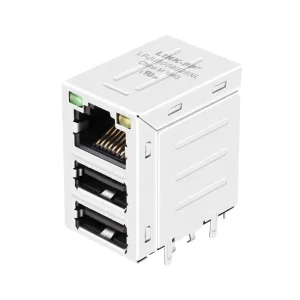
Discover our extended range of long-haul transceivers, SFP modules, and magnetic RJ45 connectors.