Xelivor Xelivor

Optical Transceivers 100G/200G/400G Module Factories & Exporters

Next-Generation Coherent, PAM4, and Silicon Photonics Solutions Driving Global AI Datacenters and Enterprise Cloud Architectures

High-Performance 100G/200G/400G Core Optical Transceiver Modules

Explore our flagship, carrier-grade optical modules designed for maximum throughput, minimized latency, and optimal thermal efficiency.
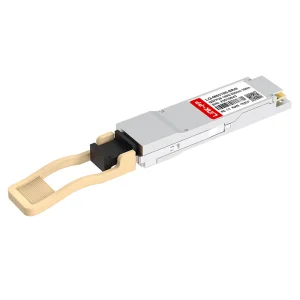
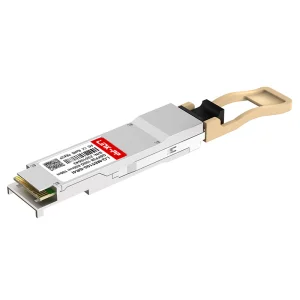
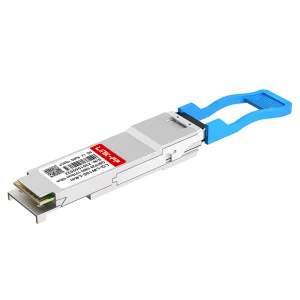
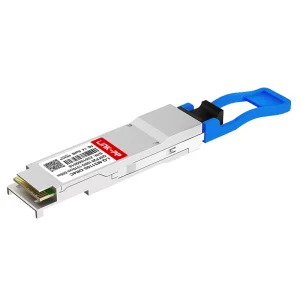
100G Base-t Ethernet Module 850nm 100m MPO QSFP28 Optical Transceiver

100G Base-t Ethernet Module 850nm 100m MPO QSFP28 Optical Transceiver

View Specifications
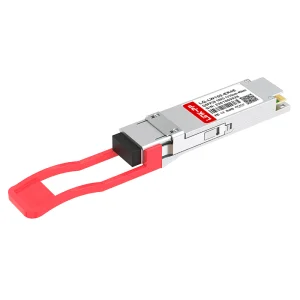
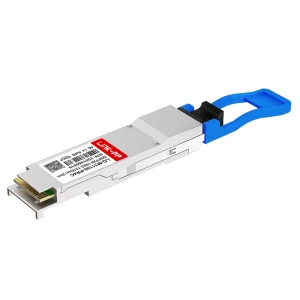
QSFP28 100G Base-t 850nm 100m MPO MMF Fiber Optical Transceiver Module

QSFP28 100G Base-t 850nm 100m MPO MMF Fiber Optical Transceiver Module

View Specifications
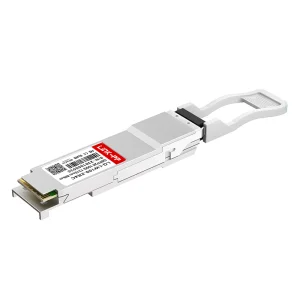
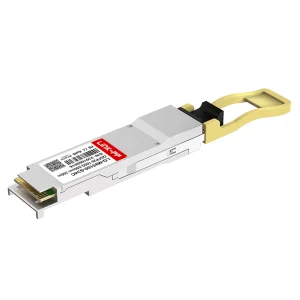
100GBASE-LR4 Duplex LC SMF Optical Transceiver Module Single Mode 1310nm 100G QSFP28 10km

100GBASE-LR4 Duplex LC SMF Optical Transceiver Module Single Mode 1310nm 100G QSFP28 10km

View Specifications
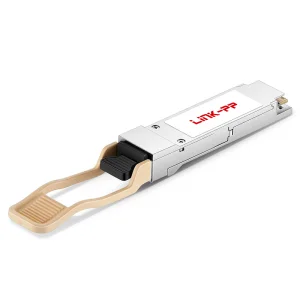
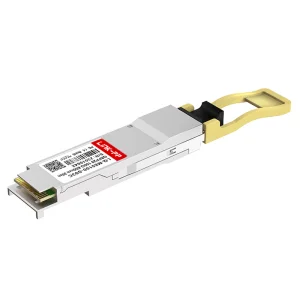
100GBASE-ER4 SMF QSFP28 Transceiver Duplex LC Single Mode 1310nm 100G Optical Module 40km

100GBASE-ER4 SMF QSFP28 Transceiver Duplex LC Single Mode 1310nm 100G Optical Module 40km

View Specifications
100GBASE-ZR4 Duplex LC SMF Optical Module 1310nm Single Mode 100G QSFP28 Transceiver 80km

100GBASE-ZR4 Duplex LC SMF Optical Module 1310nm Single Mode 100G QSFP28 Transceiver 80km

View Specifications
200GBASE-SR4 Optical Transceiver Module MTP/MPO-12 MMF Multimode 850nm 200G QSFP56 100m

200GBASE-SR4 Optical Transceiver Module MTP/MPO-12 MMF Multimode 850nm 200G QSFP56 100m

View Specifications
400G DR4 QSFP-DD PAM4 1310nm 500m MTP/MPO-12 APC SMF Optical Transceiver Module

400G DR4 QSFP-DD PAM4 1310nm 500m MTP/MPO-12 APC SMF Optical Transceiver Module

View Specifications
Single Mode 400G CWDM QSFP-DD LR4 10km Duplex LC SMF Optical Transceiver Module

Single Mode 400G CWDM QSFP-DD LR4 10km Duplex LC SMF Optical Transceiver Module

View Specifications
8+ Yrs
Industry Experience
68+
R&D Engineers
$12M+
Annual Export Volume
850+
Supply Chain Partners

Industry Evolution: The Multi-Gigabit Paradigm Shift

The telecommunications and optical communications landscape is experiencing an unprecedented inflection point, catalyzed by the explosive rise of Artificial Intelligence (AI), Machine Learning (ML) architectures, hyper-scale cloud data centers, and the standard rollout of 5G infrastructure. Today's bandwidth demands are no longer growing linearly; they are expanding exponentially. This surge has forced a paradigm shift from traditional 10G and 40G architectures toward ultra-high-speed 100G, 200G, and 400G pluggable transceivers, with the path toward 800G and 1.6T already taking shape.

Strategic Key Insight: Moving beyond 100G requires a shift from NRZ (Non-Return-to-Zero) modulation schemes to PAM4 (Pulse Amplitude Modulation 4-Level). PAM4 doubles the transmission capacity within the same optical bandwidth, though it introduces tighter signal-to-noise ratio (SNR) margins that demand advanced, integrated Digital Signal Processors (DSP) and high-gain Forward Error Correction (FEC) algorithms.

Key Technical Trends Shaping 100G/200G/400G Networks

In navigating this high-capacity transition, optical designers must balance three critical parameters: reach (transmission distance), power dissipation (thermal envelope), and spectral efficiency. Several technological breakthroughs are driving the current generation of optical modules:

  • Silicon Photonics Integration: By integrating lasers, modulators, and photodetectors onto a single silicon chip rather than relying on discrete components, manufacturers dramatically reduce fabrication footprint and costs while improving reliability.
  • Transition to Higher Baud Rates: Utilizing 53 Gbaud and 100 Gbaud per lane enables 400G transmission through 4x100G and 8x50G configurations. This significantly reduces the complexity of optical multiplexing (WDM) and fiber cabling requirements.
  • Co-Packaged Optics (CPO) vs. Pluggable Form Factors: While CPO remains on the horizon for 1.6T and beyond, pluggable modules (QSFP28, QSFP56, QSFP-DD, and OSFP) continue to dominate current deployments. Their thermal tolerances and hot-swappable architectures provide operational flexibility and lower upfront capital expenditure (CapEx).

Comparing 100G, 200G, and 400G Form Factors & Architectures

A detailed overview of optical modulation standards, distance limits, connector types, and typical enterprise use cases.

Transceiver Class Common Form Factors Modulation Type Connector Interface Target Reach Primary Deployment Arena
100G Series QSFP28 NRZ / PAM4 (Single-Lane) Duplex LC / MPO-12 100m (SR4) to 80km (ZR4) Enterprise Core, Metro Access, Spine-Leaf Interconnects
200G Series QSFP56 / QSFP-DD PAM4 (4x 50Gbps) MPO-12 / Duplex LC 100m (SR4) to 10km (LR4) Mid-Tier Cloud Datacenters, HPC Clusters, Telecom Upgrades
400G Series QSFP-DD / OSFP PAM4 (8x 50G / 4x 100G) MTP/MPO-12, MPO-16, LC 500m (DR4) to 40km (ER8) Hyperscale Backbone, AI Supercomputing Fabrics, Core Edge

Global Sourcing: Strategic Enterprise Procurement Demands

As global telecom operators and enterprise networks modernize, procurement teams face complex criteria beyond simple price-per-port. Modern network architects look for high reliability, predictable lead times, and seamless multi-vendor compatibility. In compatibility-critical ecosystems (environments running switches from Cisco, Arista, Juniper, Mellanox, and others), purchasing unverified third-party optics can lead to operational failures, system lockouts, and expensive downtime.

1. OEM/ODM Interoperability

Procurement teams require transceivers with custom-coded EEPROM/MCU firmware, allowing them to interface with host systems as native modules, bypassing warning blocks.

2. Low Power Consumption

In hyper-scale sites housing thousands of active transceivers, a saving of even 0.5W per module scales up to megawatt-level energy savings, directly reducing cooling and OpEx overheads.

3. Supply Chain Security

Geopolitical challenges highlight the importance of supply-chain diversification. Companies require partners who can manage component pipelines, source dual-origin components, and guarantee consistent delivery.

China Factory 4.0: Supply Chain Resilience and Efficiency

To meet global capacity and price expectations, Chinese manufacturing facilities have moved beyond basic assembly into the Factory 4.0 paradigm. This shift relies on automation, precision optoelectronic packaging, and strict end-to-end quality assurance systems.

The manufacturing process for modern optical modules involves ultra-precise sub-micron mechanical positioning. To produce high-performance 400G transceivers, factories use automated active alignment techniques to couple optical fibers with Transmitter Optical Sub-Assemblies (TOSA) and Receiver Optical Sub-Assemblies (ROSA) within micron-level tolerances. This minimizes insertion loss and maximizes signal integrity.

Xelivor Optoelectronics: Operational Excellence and Production Strengths

Established in 2016, Xelivor Optoelectronics Co., Ltd. is a specialized manufacturer and exporter of optical transceivers and high-performance fiber connectivity systems. From our advanced manufacturing site, we serve key operators in cloud computing, telecom, and corporate network systems.

With 8 years of industry experience and 6 years of direct export experience, Xelivor has grown its global reach, generating annual export revenues exceeding USD 12 million. Our solutions support networks across North America, Europe, Southeast Asia, the Middle East, and South America.

  • R&D Depth: Supported by 68 R&D engineers, we launched over 85 new products last year to support evolving network requirements.
  • Quality Focus: A QA team of 32 specialists monitors our manufacturing workflow, including incoming inspection, aging tests, compatibility testing, optical parameter verification, and final checkout.
  • Supply Chain Stability: Long-term partnerships with over 850 component suppliers ensure stable material flows and agile production.
  • Customization Options: We support OEM, ODM, custom firmware coding, personalized labels, and specialized packaging options.

Deployment Scenarios: Aligning Architecture with Distance

How infrastructure teams specify, purchase, and deploy 100G, 200G, and 400G transceivers based on real-world constraints.

1. AI Cluster Interconnects (Short Reach: 100m - 500m)

AI clusters running large language models require high-speed inter-node communication. To handle these demands, architects deploy high-density modules like the 400G QSFP-DD SR8 (850nm, 100m) and 400G DR4 (1310nm, 500m). These are paired with MPO-16 and MTP-12 fiber connectors to establish high-throughput parallel data lanes.

2. Spine-Leaf Cloud Data Centers (Medium Reach: 500m - 2km)

Within large modern datacenters, Leaf switches connect to Spine switches over distances up to 2 kilometers. Common choices for these lengths include 100G QSFP28 CWDM4 and 400GBASE-FR4 (CWDM, 2km). These modules run over cost-effective single-mode fiber (SMF) via duplex LC connectors, using coarse wavelength division multiplexing to minimize necessary fiber runs.

3. Metro Networks and Long-Haul Telecommunications (Long Reach: 10km - 80km)

For connectivity between municipal sites and long-haul backbones, optical power must withstand dispersion losses. Network operators deploy 100GBASE-LR4 (10km), 100GBASE-ER4 (40km), and 100GBASE-ZR4 (80km) modules, which feature integrated Avalanche Photodiodes (APD) or optical pre-amplifiers to maintain link stability across long spans.

Technical Q&A: Core Technical Inquiries

Answers to technical and engineering questions regarding transceiver implementation, testing, and deployment.

Q1: What is the main difference between PAM4 and NRZ modulation in 100G vs 400G transceivers?
NRZ (Non-Return-to-Zero) uses two voltage levels to represent 1s and 0s, transmitting 1 bit per symbol. PAM4 (Pulse Amplitude Modulation 4-Level) uses four voltage levels to transmit 2 bits per symbol, doubling the transmission capacity in the same physical space. However, PAM4 is more sensitive to optical noise, requiring digital signal processors (DSP) and Forward Error Correction (FEC) to ensure data accuracy.
Q2: How does Xelivor verify host compatibility for major switch brands?
Our test lab is equipped with actual switches from leading network brands, including Cisco, Juniper, Arista, Dell, HPE, and Mellanox. Every module is programmed with custom firmware and tested on-host to confirm transceiver initialization, interface recognition, DOM readouts, and error-free traffic flow under load.
Q3: Why are DR4 modules preferred over SR4 modules for greenfield cloud data center builds?
While SR4 uses multimode fiber (MMF), which is cost-effective for short distances, MMF has a limited reach due to modal dispersion. DR4 modules operate over single-mode fiber (SMF) up to 500 meters. Single-mode fiber provides an easier upgrade path to higher speeds, such as 800G and 1.6T, without needing to reinstall the underlying cable infrastructure.
Q4: What role does Forward Error Correction (FEC) play in 400G deployments?
Due to the reduced optical signal-to-noise ratio (OSNR) in PAM4 modulation, transmission errors can occur. FEC adds redundant error-correcting code to the data streams. The receiving DSP decodes this information and corrects single-bit errors in real time, enabling reliable links across the target reach without requiring retransmissions.
Q5: How do custom firmware capabilities help manage hardware shortages?
By adjusting the firmware profile on the transceiver controller, we can configure a single hardware design to work with various switch brands. This allows network administrators to maintain a unified inventory of modules and configure them for specific host environments as needed, reducing spare stock requirements.

Advanced Long-Range & High-Density Optical Portfolios

Browse our portfolio of specialized transceivers, including long-reach single-mode fibers and high-density parallel multimode modules.
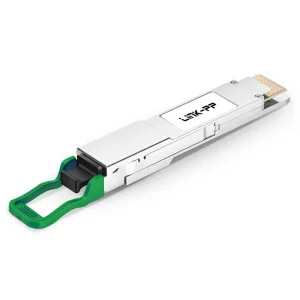
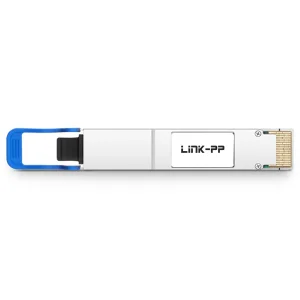
400GBASE-FR4 Duplex LC Optical Module 400G CWDM QSFP-DD PAM4 2km DDM SMF Optical Transceiver

400GBASE-FR4 Duplex LC Optical Module 400G CWDM QSFP-DD PAM4 2km DDM SMF Optical Transceiver

View Specifications
400GBASE-LR8 Duplex LC Optical Transceiver Module SMF 1310nm 400G QSFP-DD 10km

400GBASE-LR8 Duplex LC Optical Transceiver Module SMF 1310nm 400G QSFP-DD 10km

View Specifications
400GBASE-ER8 Single Mode 1310nm 400G QSFP-DD 40km Duplex LC SMF Optical Transceiver Module

400GBASE-ER8 Single Mode 1310nm 400G QSFP-DD 40km Duplex LC SMF Optical Transceiver Module

View Specifications
Multiple Mode 850nm 400G QSFP-DD SR8 100m MTP/MPO-16 APC MMF Optical Transceiver Module

Multiple Mode 850nm 400G QSFP-DD SR8 100m MTP/MPO-16 APC MMF Optical Transceiver Module

View Specifications
100GBASE-PSM4 QSFP28 1310nm 500m SMF 100G MPO-12 Optical Transceiver Module

100GBASE-PSM4 QSFP28 1310nm 500m SMF 100G MPO-12 Optical Transceiver Module

View Specifications
QSFP28 100GBASE-PLR4L 1310nm 2km 100G MPO-12 SMF Optical Transceiver Module

QSFP28 100GBASE-PLR4L 1310nm 2km 100G MPO-12 SMF Optical Transceiver Module

View Specifications
100GBASE-ESR4 QSFP28 100G 850nm 300m MPO-12 MMF Optical Transceiver Module

100GBASE-ESR4 QSFP28 100G 850nm 300m MPO-12 MMF Optical Transceiver Module

View Specifications
100GBASE-SL4 Multimode 100G QSFP28 850nm 30m MPO-12 MMF Optical Transceiver Module

100GBASE-SL4 Multimode 100G QSFP28 850nm 30m MPO-12 MMF Optical Transceiver Module

View Specifications

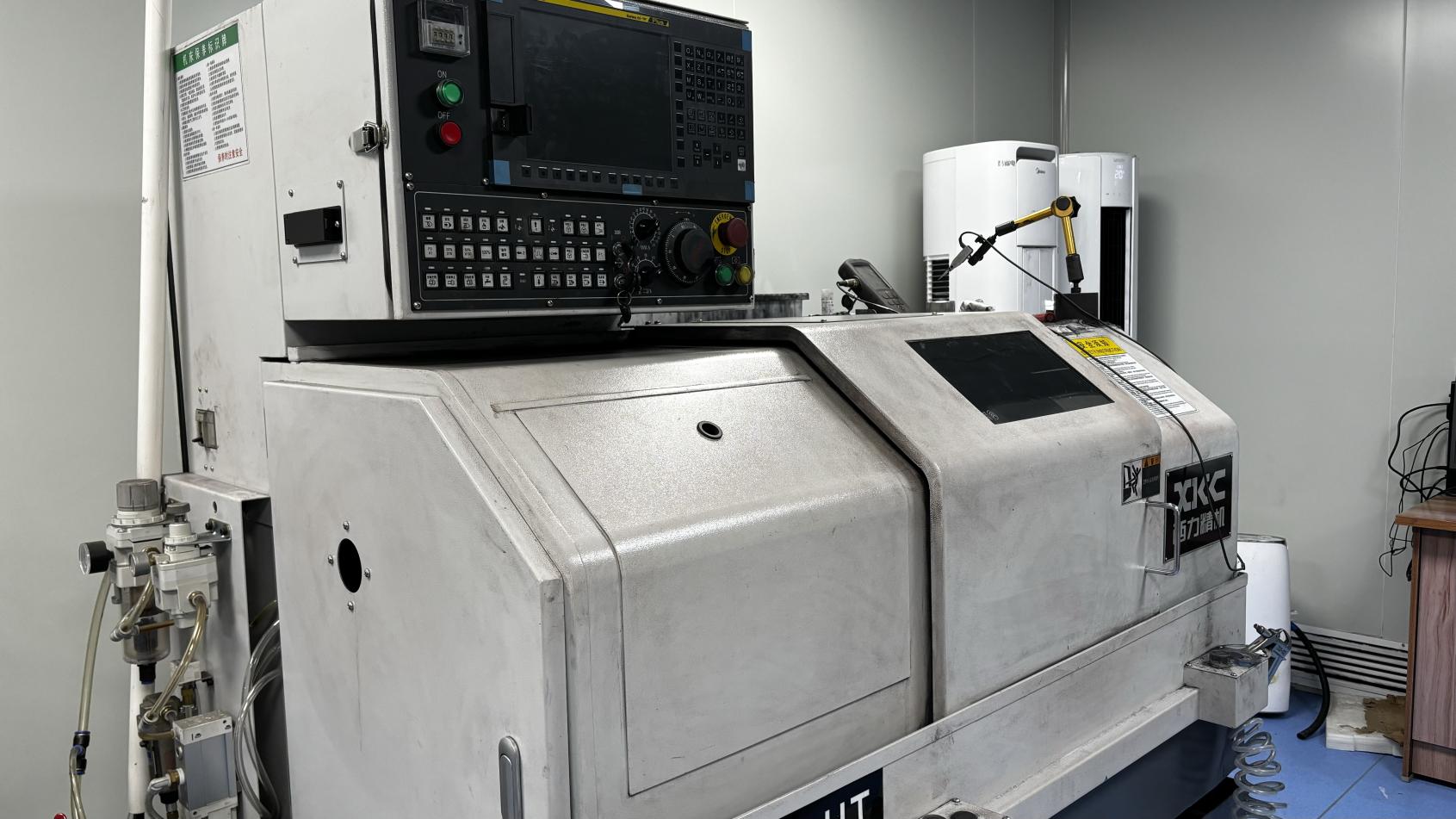
Modern Manufacturing Facility & Testing Infrastructure

Take a look inside our ISO-certified production floor, automatic alignment cleanroom, and comprehensive optical validation chambers.


Production Workshop
Quality Control Lab
Testing Equipment
Assembly Area
All 100G/200G/400G Module Products